Saturday, 17 January 2015

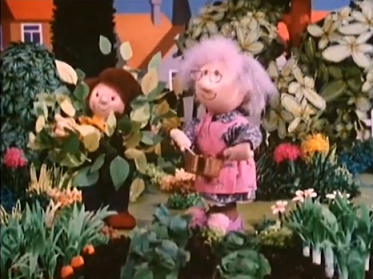
Ragdolly Anna

Genre: Children's
Channel: ITV
Transmission: 26/07/1982 - 13/07/1987


The life of a doll can be a varied profession.

Certain dolls - particularly hideous and creepy ones - find themselves trapped within the confines of display cabinets in the garish front rooms of fifty-something women. Other dolls - usually with names such as Blinking Belle (we're a marketing genius, oh yes!) - spend their days being cared for and chewed on by little girls.

One doll, though, by the name of Ragdolly Anna had a much more interesting career.

It's a Doll's Life


Ragdolly Anna lives on the first, second and third floor (God knows what the rent's like) of a flat with the little dressmaker (Pat Coombs). They're not alone to bicker about who's turn it is to make a cup of tea, although the dressmaker is the only one physically capable of such a task, as they're joined by the dressmaker's dummy and the wise white cat.


Together the four of them embark on adventures which are simultaneously gentle and surreal. Take, for example, the second episode of series 1. It all starts off quite delightfully with the little dressmaker (she's not that little) and Ragdolly Anna renting an allotment patch. Before you know it, though, Ragdolly Anna is making friends with a talking scarecrow. Soon enough, she's only gone and make a cape and tin hat for the old straw stuffed idiot.

The Story of a Doll


Based on the stories written by Jean Kenward, Ragdolly Anna was produced by Yorkshire Television between 1982 - 1987 and clocked up a total of 30 episodes.

Interestingly, the show used chromakey technology to provide more animated action from Ragdolly Anna. For the majority of the show, she was nothing more than a handpuppet but certain sections used chromakey to shrink a real life person (played by Michele Davidson/Caroline Berry) in a Ragdolly Anna suit into the action.


When they weren't indulging in bluescreen magic, the producers used a mixture of live action and static photos to tell the stories.

The series was directed by Doug Wilcox and John Allen.

Interestingly, the series was sold overseas and appeared on Malaysian TV under the Channel 5 umbrella in 1988.

Dolls Aren't Just for Girls!


Yes, that's right! We loved Ragdolly Anna as a young boy and we're not ashamed to admit it!

We can justify this as we feel any child - male or female - can relate to the show. Ragdolly Anna is the child of the piece, the little dressmaker is the mother and the white cat is, for all intents and purposes, the grandmother.


Look at the very first episode of the series where Ragdolly Anna is sent out to get some bacon. Like a good child, wanting to please their mother, Ragdolly Anna sets out, but soon becomes lost. It's every child's fear that they'll get lost and seperated from their parents, so it's easy to see how this could engage them.

Admittedly, Ragdolly Anna gets trapped down a drain and then rescued by a frog, but the main thrust of the story is something that a child could relate to!


Watching it back now - the BFI Archive is the only present option - we were still enthralled by it as there's a captivating mix of simplicity and wild adventure at play. The one thing that did disturb us slightly, though, was the chromakey doll sections which reminded us of the evil doll from Terror of the Autons too much.

Finally, the Ragdolly Anna theme tune is an amazing piece of music hall piano which rolls along with horns beefing it up. It's like a lost slice of Ray Davies or Syd Barrett at their British storytelling best.

C'mon Network DVD! RELEASE THE ENTIRE SERIES!

PRESS CUTTINGS


TV Times - Volume 122 no.2 - 04/01/1986 - Sue Fox

Monday, 12 January 2015

Why Michael Cole Was an Incredible Star of Children's TV

Michael Cole Children's TV
Certain names leap out at us when we're researching TV shows and receive a huge tick in the "BLOODY REVIEW IT ASAP!" box.

Michael Cole is one of those names.

With a huge array of talents at his disposal he managed to write, direct and produce some of Britain's best loved children's shows throughout the 1970s and 80s.

Our own childhood was lit up by afternoon viewings of Gran, Bric-a-Brac, Chock-a-Block and Pie in the Sky, so we felt it only right to dedicate a post to his amazing talent.


The Early Days of Evacuation, France and Bod


Michael found himself born into Willesden, London in March 1933. It was an unfortunate time to be born with World War 2 only a few years away and, sure enough, Michael was evacuated to Cheltenham in 1940.

Following a stint of national service where he studied Russian at Cambridge university in order to train as an intelligence officer, Michael moved into advertising. By now, though, Michael was married to Jo and starting to get itchy feet about Britain and writing copy.

So, in 1962, they moved to Tourette, Provence in France.

It was here that Michael and Jo's creative relationship really started to flourish. The first fruit of which was Bod. The adventures of an enlightened young boy, Bod, was the Coles' attempt to create a children's character with a more enduring appeal than Noddy [1].

Back then, of course, Bod was merely a character to keep their children entertained. However, maybe Bod was engaging enough to entertain other people's children too.


Michael and Jo worked hard at developing Bod and, in 1965, the stories were taken up by Methuen and published [1].

This first flush of success was soon followed by Michael starting work at the BBC in 1967 and, very quickly, he found himself directing Play School. This proved the perfect arena for Bod to make his televisual debut, so the Bod stories were soon being read out on Play School.


Spoken word renditions of Bod were all well and good, but they didn't satisfy Michael's Bod shaped vision, so he and Jo soon began to devise a fully animated TV show. Forming a production company - Bodfilms - with David Yates, the trio were able to start production of 13 Bod episodes in 1975.

Starring the beautiful tones of John Le Mesurier and Maggie Henderson, Bod was backed by music from Derek Griffiths. The show was a huge success and repeated until 1984.

Bod had been very successful, but Michael still had plenty of tricks up his sleeve.

The Demand for Michael Cole


Prior to the animated version of Bod, Michael and Jo had created the surreal and imaginative Fingerbobs which used finger puppets to mix song and adventure in the Watch with Mother slot. Fingerbobs also spawned the 1985 spin-off series Fingermouse.


Michael's initial tenure on Play School led to a long and successful working relationship with executive producer Cynthia Felgate. The pair had a talent for creating shows aimed at preschoolers which combined learning with fun such as Ragtime, Bric-a-Brac, Chock-a-Block and Playbus.


Out of this relationship, Michael managed to rack up show after show in the 1970s and through into the 80s. With shows under his belt such as Pigeon Street, Over the Moon, Stop - Go, series 1 of Postman Pat and all the others we've mentioned, it's fair to say he more or less owned the See-Saw slot.


Michael had already laid out quite the legacy, but an uncertain future awaited him.

Overcoming Tragedy and Developing New Shows


Sadly, Michael became a widower in 1985 following the death of Jo. Considering the close working and family relationship they had built, it could easily have crippled Michael's energy. Nonetheless, Michael found that life went on and created the Dot stop for Play Bus and ensured his name remained on screen.

1988 saw further hardship, though, when Michael was involved in a car crash. Doctor's were not confident of a recovery and predicted permanent brain damage. However, Michael's determination meant that he managed to not only teach himself to read and write again, he also created further TV shows in the guise of Alphabet Castle and Tinysaurs.


And happiness wasn't just limited to his continued success within the confines of TV.

Michael was struck by Cupid's arrow once again and married his second wife Pam in 1993. They spent eight happy years together before his death at the age of 68.

A young age to go, but one where his status as a legend of children's TV had long been secured.

Why Do We Love Michael Cole?


Back in the mid 80s we had absolutely no idea who Michael Cole was, but the shows he worked on embedded themselves in our mind for decades.


Nearly all the children's shows that we remembered most vividly - Bric-a-Brac, Chock-a-Block, Gran and Pie in the Sky - featured Michael's involvement and illustrates how much magic he could bring to television.

They were important shows which taught us about language, song and an overall joie de vivre - I mean, who can't take solace from Gran that pensioners carry on having fun?


In fact, older characters such as Gran pervade Michael's work and we feel that this helped endure his shows to children. With grandfatherly characters such as Brian Cant in Bric-a-Brac it imbues you with that same fuzzy feeling you got, as a child, when visiting your grandparents. When a bag of sweets was never far away and something ancient and interesting would be brought out from a dusty cupboard to look at.


It's a testament to Michael that his shows are now ancient and interesting curios that deserve special attention. We can only pray that the BBC honour this at some point with a retrospective.

Photo of Michael Cole kindly provided by Lo Cole (www.locole.co.uk)

References
[1] http://www.toonhound.com/coles.htm

Saturday, 3 January 2015

5 Essential Retro TV Theme Tunes

Delving deep through the past of British telly has provided us with some utter delights of entertainment.

What is it though that kick starts each amazing journey for us? Sure, it's usually a glass/bottle of scotch, but what if we're talking content wise?

Yes, that's right! It's the humdinger that is AN AMAZING THEME TUNE!

Today, then, we're going to share five of the very best we've uncovered!

1. Johnny Jarvis


Gary Shail's theme tune uses just a flute and acoustic guitar, but manages to encapsulate those formative years where a boy becomes a man.

It perfectly reflects the indecision, frustration and sadness that haunts the titular character over the series.One where he struggles with unemployment, the mundanity of life and death.

One of the episodes features Lipton's band rehearsing a version of the song with lyrics, but the theme uses just an instrumental version. A shame as the lyrics really paint a picture of what Johnny becomes.

Nonetheless, the instrumental version is fantastic and utterly, utterly impossible to resist whistling.

2. Moschops


Who says that only humans deserve an amazing theme tune?! Dinosaurs are just as entitled and, boy, what a theme tune they get!

No! We're not talking about Jurassic Park! We're talking about Moschops!

Daryl Runswick created a masterpiece of prehistoric rock and roll which is packed full of bluesy licks and traditional scale work.

Also featuring is an impressive array of instruments taking in clarinets, recorders and Runswick's own invention, a piccolo bass guitar.

We chatted to Daryl Runswick a few years back about the theme tune and he revealed it was recorded, along with the series' incidental music, in just 3 hours!

3. Rockliffe's Babies


A chorus of disenchanted youths start singing a paean to council estate life as lively saxaphones come straight to the fore. Bloody hell! It doesn't get more 80s than this!

Joe Campbell and Paul Hart composed the theme tune for late 80s police rookie drama with such great lyrics as:

"Rock-a-bye baby in a tower block
Your mum's on the social , dads in the dock"
and

"When Dads let out your mother will fall.
You'll have a kid sister, cradle and all."
They're not intrinsically linked to the main characters in any way which is a slight criticism, but it's a mesmerising piece which captures the environment the 'babies' are working in.

4. Making the Most of the Micro


1982's The Computer Programme had a fantastic brooding, grime filled synth score to open the show, but 1983's spin off Making the Most of the Micro tops even this.

A more lively and haunting piece with a sense of urgency pulsating through its veins means it's one of our favourite synth led theme tunes.

If you can imagine The Tripods theme and the Doctor Who theme coming together for a night of electronic passion, then this is the love child!

Roger Limb - stalwart of the Radiophonic Workshop - created the piece and has absolutely knocked our socks off with it.

It's that good!

5. Follyfoot


It's back to the 70s to discover just how much effort went in to creating theme tunes with Follyfoot!

Steven Francis aka Francis Essex aka brother of Follyfoot writer was tasked with composing a theme tune which would resonate with equine themes and children's imaginations.


With a vision as grand as the show's cast, crew and plotlines, Francis conjured up a majestic and sweeping cinematic theme tune.

Starting off with eerie haunting vocals reminiscent of a late 60s psych love song, strings soon begin to soar as the vocals beg the 'lightning tree' to grow and keep dreams alive.

If only kids shows today had such epic theme tunes then perhaps the future would be a better place.

Saturday, 20 December 2014

The Computer Programme

Genre: Education
Channel: BBC1 & BBC2
Transmission: 11/01/1982 -15/03/1982


A world without computers would be a sorry place indeed. Just imagine having to ring up all those car insurance companies to compare prices. Doesn't bear thinking about.

However, such a world existed and it wasn't that long ago.

Up until the early 1980s, computers were the preserve of universities, businesses and a few enthusiasts tinkering in their garages.

AND THEN MICROCOMPUTERS ENTERED THE MARKETPLACE!

These affordable machines meant that Britain could start getting to grips with computers from the comfort of their front room. No one had any idea on how to use one though.

The BBC decided, therefore, to launch The Computer Programme as part of their computer literacy project to get the country up to scratch on working with computers.

Getting to Grips with Microchips


The Computer Programme saw Ian McNaught-Davis (Mac for short) and Chris Serle taking viewers through the rudimentary basics of computers. The aim was to show what computers were capable of and how they achieved this.

Whilst Mac had a firm grasp of how computers worked, Chris Serle was very much the layman with whom viewers could look at and say "If he can bloody do it, then so can I!".

Each episode would open with an example of an everyday scenario that computers could be used to handle e.g. instead of sending a telegram, why not use a computer to send an electronic message (essentially a prototype email).

Several features were shown which demonstrated computers at work in the real world. Some of these examples were rather complex such as controlling traffic lights in London, but some were simpler such as Beryl the sweet shop owner keeping track of her stock and finances.

As part of their computer literacy project, the BBC released the BBC Micro priced at £235 to accompany the series. This allowed viewers to tackle programming in the BBC BASIC language which featured heavily throughout the series.

Compiling the Show's Code


Ten episodes of The Computer Programme aired in early 1982 and had a rather curious transmission history. The first strand of transmissions were on Monday afternoons on BBC2 to cater for the school demographic, but a few weeks later a BBC1 broadcast also began to air on Sunday mornings. A week or two after this, the BBC introduced a late night Monday BBC1 slot for the series. It's fair to say they didn't want the show to escape anyone's viewing habits.

The series was repeated several times over the next couple of years, but was last transmitted in 1984. Part of the reason for this is that technology advances quickly. To counter this, a number of spin off shows followed in The Computer Programme's footsteps: Making the Most of the Micro (1983) and Micro Live (1984 - 87).

The series was also shown in the USA on PBS and a Spanish version popped up on the Catalan channel TV3. Interestingly, the TV3 broadcasts featured original material which replaced the BBC Micro with Spain's 'Dragon 200' computer.

Paul Kriwaczek, who had a strong background in education programmes such as Bellamy's Backyard Safari and Ancestral Voices, produced The Computer Programme. The moody and menacing synths which accompanied the opening and closing credits were provided by none other than Kraftwerk! Both sequences were taken from their 1981 album, Computer World.

Taking Computers for Granted


We used to potter about on a BBC Micro in the late 80s at primary school, but this was mostly just educational nonsense such as spelling games.We never really learned about what a computer was. In fact, nearly 30 years on and we still don't really.

Everyone uses computers now (a fact predicted in episode one of The Computer Programme), but we all take them for granted. All we know is that there's some wires in there and they've stopped us having to trudge round the supermarket at weekends.

As luck would have it, YouTube had all ten episodes of The Computer Programme available, so we could investigate this burgeoning age of computing.

Mac and Chris Serle are a likeable duo, not quite a double act but affable enough. Chris Serle (imagine a less sneering and younger Jeremy Paxman) looks absolutely flummoxed at times by Mac's explanations, but perhaps encouraged by Mac's winning smile, Serle slowly begins to grow in confidence. And this is exactly what viewers at home wanted to feed off.

Some of the features are fascinating and our particular favourite is when they investigate Prestel. It's kind of the original internet, but if it was cross pollinated with Teletext. There's no PornHub, but there is a crude version of email - The Duke of Edinburgh even had an account. What really blew our minds was that there was a primitive form of internet banking available. In 1982. Madness. Utter madness.


Obviously, with our 21st century eyes, the majority of the features look ridiculously dated, but this is where the nostalgic charm comes from. Even though early computers were slow and achieving anything was a struggle, it gave us such a thrill. We knew no different. It was the future as far as we were concerned. Everything was going to be okay from now on.

The show is pitched perfectly at a beginner's level, but never patronises and episodes are nippy affairs which fly by. The Computer Programme does a great job at demistifying computers and it got us thinking. Is it time for a modern update? There's still a huge section of the population who may use computers in their day to day life, but don't know their capabilities outside of Facebook.

For now, though, we would highly recommend watching a few episodes to brush up on the basics of computing.

Monday, 1 December 2014

5 Hidden Gems of Children's Christmas TV

Let's face it, Christmas was always, ALWAYS, the pinnacle of every child's year. The endless anticipation of whether you'd get all 600 items on your list, the sugar induced insanity brought on by too many Matchmakers and then, of course, there was the festive telly. All your bog standard, everyday shows, but with with tinsel hastily thrown up in the corner of the studio.

The arrival of the Christmas editions of the Radio Times and TV Times meant that it was time for some intense scrutiny of the festive listings. You had to watch as much as possible and, more importantly, plan a recording schedule. That one Christmas VHS would provide hours of entertainment all year round, because, get this, Christmas telly was that spellbinding.

In all the excitement of Christmas, though, some of the shows we adored were forgotten and lost to the mysteries of time. In order to make sure you know there's more to life than The Snowman, we're going to take you through our five picks of Christmas children's shows you need to watch.

ChuckleVision- Traditional Christmas - 19/12/1987

chuckle brothers christmas


Despite running for over 20 years ChuckleVision yielded relatively few Christmas specials, but one that really stands out is from the very first series in 1987.

Barry's gone and got Paul a lovely, sparkly present to put underneath the Christmas tree, but as per the standard Chuckle Brother relationship, Paul hasn't got Barry anything - it's better for Barry to give than receive according to Paul.

In between philosophical musing on the concept of altruism, we're treated to a series of sketches where Paul and Barry attempt carol singing, Merseyside DJ Billy Butler pops up with a festive edition of 'Armchair Theatre' and magician Simon Lovell conjures up a Christmas cake.

In the end everyone's left smiling as Paul makes Barry's Christmas dreams come true with a ridiculously large present, but curiously we never do find out what's in there. A particularly large jammy doughnut, perhaps?

The episode's a relatively simple affair and is a world away from the plotcentric, narrative approach of series 3 onwards, but it's a celebration of brotherly love and, apart from lashings of egg nog, what more do you want at Christmas?

'Traditional Christmas' can be found on the ChuckleVision series 1 DVD.


Knightmare Series 4 Episode 16 - 21/12/1990

Knightmare Christmas

Sure, it's not exactly a Christmas episode. Hell, for 99% of the episode there's not even a whisper about the festive season. However, that final 1% produces a wonderful bauble to hang on the Curious British Telly Christmas tree.

Helmet wearing Giles is deep in the dungeon, standing atop a transporter pad and his advisors are debating his next step. Suddenly, the dungeon begins to shake; Pickle is alarmed, but Treguard assures him it's just the end of this particular era for the dungeon. Treguard casts a quick spell to reunite Giles with Robin, Andrew and Bret. And then...

Merlin appears! And he's not just in the mood for some beardy sorcery! With a quick wave of his wand Knightmare Castle is covered in decorations and 'Deck the Halls with Boughs of Holly' starts playing!

At the time we were absolutely overjoyed. School had finished a few hours earlier and we were getting more and more excited by the minute. The icing on the cake was this short, magical segment which left us with a huge smile on our face.

Giles and his team weren't exactly singing "Joy to the World" what with their quest being cut short though...

The whole episode can be found here.

Fat Tulip's Christmas - 25/12/1987

Fat Tulip Christmas

Tony Robinson's surreal tales of the goings on at Little Monkhams was rewarded with the ultimate honour of a Christmas special in 1987.

Fat Tulip wants to have a fun filled Christmas with all their best mates and plenty of stuffing sandwiches, but Thin Tim puts the kaibosh on this as he wants a quiet affair with his Aunt Mable. Out in the garden, Ernie and Sylvia the frogs have received a suspicious invitation to a Christmas party organized by the toads.

Things become complicated when Fred the Baddie turns up with 20 fellow inmates from the local prison. After Fat Tulip turns them away, 21 suspicious looking Aunt Mables turn up and are invited in. Meanwhile, the deceitful toads are party is nothing more than a ruse to rob the garden folk of their grub.

With a little helping of festive luck and cheer, though, the toads get their comeuppance and everyone else parties the night away.

Fat Tulip's Christmas was the final episode of the Fat Tulip franchise and makes for a fitting end. It's a quirky, surreal take on Christmas and Tony Robinson, again, manages to confidently portray all the characters without confusing the viewer. It also has the added bonus of Tony Robinson getting to grips with a turnip.

Fat Tulip's Christmas can be found on the Fat Tulip DVD.

The Children of Green Knowe - 26/11/1986 - 17/12/1986


Everyone's go to choice for Christmas telefantasy seems to be The Box of Delights, but that's a bit too popular for us so we're sticking with 1986's The Children of Green Knowe.

Tolly (Alec Christie) has been given the festive treat of spending Christmas with his maternal great-grandmother (Daphne Oxenford) at the family home of Green Knowe. Delightful it may sound, but it turns out that Tolly is in for a traditional Christmas ghost story.

Across four episodes and set against a wonderfully atmospheric BBC Radiophonic soundtrack, Tolly finds himself interacting with ancient ancestors and fighting evil forces on the way to rummaging through his stocking on Christmas day.

Although Christmas doesn't start making its presence felt until the last two episodes, The Children of Green Knowe retains a wintry, festive charm and you can't help but cosily wrap yourself up in great granny Tolly's family history.

The whole serial is up on YouTube here.

Roland's Yuletide Binge - 25/12/1985

roland rat christmas

The self professed rodent superstar, Roland Rat, had defected to the BBC in October 1985 and a Christmas special was hastily put together to guarantee a healthy audience on the big day.

Roland's live Christmas extravaganza from the BBC is just about to be broadcast, but there's a slight technical difficulty - Roland's asleep in the rat cave!

Rushing to the Ratmobile, Roland looks like he's just about going to make it. However, the Ratmobile is in serious need of an MOT and only manages to move a few inches before the head gasket blows.

Desperate to the point of taking Errol the Hamster's advice, Roland and Kevin the Gerbil hop on a milkfloat and 'race' to Television Centre.

A whole host of stars are waiting to greet, obstruct and divert Roland such as Frankie Howerd, Valerie Singleton, the Saturday Superstore team, Russell Grant, Jan Leeming, Ian Mccaskill, Beryl Reid and Mr Showbiz himself, D'Arcy De Farcy.

Will Roland make it to the studio in time to broadcast the Christmas special to beat all specials?!

Roland Rat's appeal was never limited to just the kids, there was always plenty for the adults to pull a wry smile about and Yuletide Binge is no different. There's laughs, stars and even a few singalongs, so it's a traditional Christmas variety show.

The show was only ever broadcast once, but luckily our parents recorded it for us on their newly purchased Ferguson Videostar. As a result, we watched it endlessly all year round for the next couple of years. That VHS was lost long ago, but thankfully the whole thing is up on YouTube here.

Monday, 24 November 2014

On the Move

Genre: Adult Education
Channel: BBC1
Transmission: 12/10/1975 - 03/10/1976

On the Move Bob Hoskins

Literacy is an empowering skill and one that offers a whole new dimension of experiences. In 1972, a somewhat flawed and outdated literacy survey revealed that less than 1% of adults were completely illiterate. It worked out to roughly 330,000 adults or Wembley Stadium filled four times over; concern over these figures led to the launch of the Right to Read campaign. The BBC got involved in this public awareness program in 1975 with On the Move.


Alf (Bob Hoskins) is a removal man struggling to read and write, but between the laddish banter, he finds he can open up to his co-worker Bert (Donald Gee). Encouraged to face his anxieties, Alf begins to attend evening classes to combat his frustrating illiteracy. Every great TV show features a memorable vehicle and in this case Alf and Bert travel round in a black lorry with, uh, a big orange arrow on it. Interstitial segments feature Martin Shaw, Nigel Stock and Patricia Hayes performing literary exercises and anecdotes to inspire people to seek help.

Writing legend Barry Took weaved together the scripts for 50x ten-minute episodes which first aired between 1975 - 76 on BBC1's Sunday evening schedule. The titular theme tune to the show was by 70s pop-rockers The Dooleys and can be heard in full here. Repeats of On the Move continued until late 1978; two spin-off series continued the fight to improve literacy in Your Move and Write Away.


On the Move Patricia Hayes Martin Shaw


Featuring the late, great Bob Hoskins in one of his very first roles meant that On the Move was a show we couldn't pass on; after we found an episode on YouTube, we were delighted to discover that it was a charming little show far removed from the Open University's telly take on adult education.

Bob Hoskins inhabits the everyman role of Alf in enthralling fashion and relays the message that no one, no matter how manly, should shy away from seeking help. Many comments on the YouTube video pay testament to Bob's performance encouraging them to confront their literacy which is probably the greatest compliment Bob could have expected. Donald Gee is unable to match Bob's depth here, but most telly actors of the time (or even the present day) would struggle opposite such a marvel.

To our literate(ish) minds, we found the exercises presented fairly simple, but where else do you start? Simplicity is the key and learning from scratch the way forward. On the Move wasn't produced in order to solve literacy alone, but more to encourage people to seek help. George Auckland - future head of BBC adult education operations - remarks that it achieved this aim as "On the Monday after each episode, there would be queues around the block" to be found up and down the nation at literacy centres.


On the Move Bob Hoskins

From an amazing theme tune where you can almost taste the sunshine pouring out of it's harmonies, to Bob Hoskins' beguiling performance and topped off with a positive message, it's no surprise to learn that On the Move brought in 17 million viewers a week. Unfortunately, adult literacy still remains an issue, so perhaps it's time to instigate a similarly absorbing show.

Tuesday, 11 November 2014

Michael Sundin's Short Lived Blue Peter Career


Michael Sundin died of an AIDS related illness on 23rd July 1989 just a few years after his Blue Peter career had ended in acrimony and tabloid accusations.

The tragic backdrop against which Michael lived his last few years really piqued our interest. It's so at odds with the wholesome image of Blue Peter, but also raises the important question of whether people in the public eye are allowed private lives.

We decided to take a look at the whole affair to see exactly what happened.


Promising, Early Years


Born 1st March 1961, in Gateshead; Tyne and Wear, to Alan and Joyce Sundin, Michael began to demonstrate his efforts as a performer by winning a myriad of trampolining awards. By 1976 Michael was able to boast the World Synchro Champion title which he captured with partner Carl Furrer in the 15 - 18 year old age group.

Before long, Michael was part of the British Men's national squad, but real life came calling and, following completion of his O-levels, he took up a position as a computer programmer

However, Michael couldn't resist the throbbing heartbeat of disco and his natural talent for dance found him placing third in a national disco competition. The desire and passion bubbling inside Michael led him  to forming his own dance group, Midnight Fantasy.

Michael first started climbing the ladder, in 1980, when he appeared with Barbara Windsor in the pantomime, Jack and the Beanstalk, at the Theatre Royal, Newcastle.

It was here that Michael was first talent spotted and, before he knew it, was wowing West End crowds as Bill Bailey in Cats; his performance in this role would prove to be pivotal in his turbulent future. Michael was spotted by Disney and considered for their upcoming film, Return to Oz.

Return to Oz


One of the most intriguing and iconic characters from Walt Disney's 1985 Return to Oz film was the mechanical man, Tik Tok. Somehow managing to contort his body to fit inside this squat, tin dome was Michael.


Lyle Conway, creator of Tik Tok, illustrated just how dedicated Sundin was to his craft in an interview with Cinefex Magazine: "Michael was about five five and Tik Tok's about four foot.  So Michael had to bend with his head between his legs, bolted in, and he did the actual walking around in the thing—backwards.  Sometimes, in the morning, he wouldn't be able to fit; so it was just a matter of forcing him in.  Then everything loosened up, and his body settled into it.  When you took the suit off of him, this rush of hot air hit you and there were pools of sweat at the bottom of the thing".

Little did Michael know that a chance piece of promotion for the film would lead him to securing a presenting role on one of British TVs biggest kids show.

Michael's Dream Job


It was during the filming of Return to Oz that the Blue Peter team paid a visit to the studio and were impressed with the young Michael Sundin.

Biddy Baxter, longtime editor of Blue Peter, decided to offer Michael an audition for the presenting role being vacated by Peter Duncan. By a stroke of luck, Michael's audition involved performing an interview on a trampoline.

Michael was very different to previous male presenters in that he had a youthful vitality rather than the previous incarnates who seemed like a succession of geography teachers. Here were the blonde locks of a surfer coupled with the body of a gymnast - John Noakes he wasn't.

Sundin appeared in a total of 77 episodes of Blue Peter between 13th September 1984 - 24th June 1985. This remains the shortest amount of time served by any Blue Peter presenter, not including stand in presenters Tony Hart, Anita West and Sandra Michaels during the 1960s.

The Dream Turns Sour


Michael's contract with Blue Peter was not renewed and this is where numerous, numerous stories have begun to circulate.

Biddy Baxter has maintained that Michael was dropped due to his lack of popularity with viewers. Biddy wrote in her autobiography that "every post brought new evidence that Michael was getting a huge thumbs down".

We've only watched a handful of clips of Michael's Blue Peter work, but we certainly didn't dislike him. However, his delivery is very wooden and he doesn't come across as natural in front of the cameras as his fellow presenters.

Biddy goes on to state that "Sadly because of his voice and manner he came across as a whinger - and an effeminate whinger to boot". Is this the statement that confirms Michael was the victim of homophobia?

No. Sure, it's not fair to label being effeminate as a negative, God knows there were enough campy TV presenters in our youth, but it never bothered us.

For Michael, though, things were about to get much worse.

Tabloid Scandal


The 1980s were much a different age in which to be gay. The shame and horror that had previously been reserved for such behaviour was suddenly increased tenfold with the emergence of AIDS. Known for some time as the gay cancer, AIDS was the decade's bogeyman.

The last thing Michael needed was for the following story to hit the press:

michael sundin daily mirror
Reproduced with kind permission from the Daily Mirror

The language of the piece is indicative of the public's attitude towards homosexuals at the time and the article must have been a crushing blow for Michael. However, he had left Blue Peter by this point, so the myth that this article caused him to be sacked is nothing more than conventional wisdom.

Michael immediately rushed a statement out the following day which confirmed that he had a homosexual past, but this had been nothing more than a phase. This itself was a brave statement in a time when other public figures were far too scared to admit such a past. However, the damage had been done.

michael sundin daily mirror
Reproduced with kind permission from the Daily Mirror

Later Years


Michael's career never really recovered from the scandal, but he did go on to appear in the 1987 film Lionheart and his final appearance was as a dancer in the Rick Astley music video She Wants To Dance With Me.

In 1988 rumours began to surface that Michael was ill and on 26th July 1989 it was reported that he had died of liver cancer. It has since been revealed that his actual death was AIDS related.

Was Michael Unfairly Treated by the BBC?


After weighing up all the evidence we don't believe Michael was badly treated by the Beeb. Michael's main stumbling block was that his presenting style was below par and failed to engage and connect with the audience.

The internet, as ever, is awash with rumours that so and so saw Michael at this and that gay club and the BBC were adamant this was no place for a children's TV presenter. It didn't help that Biddy Baxter described Michael as an "effeminate whinger", but this is more a poor choice of words rather than any homophobic smoking gun.

Baxter has gone on to say that "his leaving the programme was to do with the fact that children didn't like him, nothing to do with his sexual proclivities". She also claimed that perhaps the gay angle does just make it a "better story". And this article is proof of that fact.

Ultimately, in the AIDS hysteria of the day, there was no way back for Michael. As Richard Bacon found out a decade later, children's TV presenters are not entitled to a private life. They are, first and foremost, role models as defined by society's taste.

Sadly, Michael Sundin was never able to fully voice his side of the story, so a definitive end is unlikely to be found.

Thursday, 30 October 2014

The Trials and Tribulations of Being an Archive Telly Enthusiast

We were very frustrated. Very frustrated indeed. We wanted to learn about some of the shows we vaguely remembered from our childhood, but there was barely anything online apart from a few whispers and dodgy memories.

Surely we weren't the only people to have watched, enjoyed and remembered Sebastian the Incredible Drawing Dog and Fox Tales?! This really wasn't acceptable in an information rich age, so we decided to do something about it!

Diving into the Depths of British Telly


Driven by this frustration and our rampant, uncontrollable nostalgia we got off our backsides and started to explore that warm, fuzzy glow of vintage television. A landscape where our present troubles are forgotten and we can go back to make sense of our carefree early years.  

Thomas the Tank Engine and Postman Pat were a big deal to us back then, but absolutely everyone remembers them and they're incredibly easy to access. We wanted to go a little deeper and dust off those forgotten areas of our subconscious.

The first couple of months were a little frustrating. Shows such as Sebastian and Fox Tales seemed ridiculously out of reach. We considered breaking into the BBC Archives, but we're far too polite to batter a security guard round the head with a ratchet.

Instead, we put up some vague blogs which relied on fragmented memories from our youth.

To ensure the blog had some richer content we decided to expand a little further and investigate shows from outside our lifetime. Shows such as Johnny Jarvis and Prospects were available online, so things were a little easier.

Trying to Build up Unique Content


However, barely anyone was viewing the blog and how the hell did we promote it? Unique content would be a good start, so we decided we had to up our game and go the extra mile. The first hurdle to overcome was getting our hands on some rare telly.

This obstacle was soon overcome when we discovered the BFI Archive.

Tucked away down a quiet side street off Tottenham Court Road lies the Mecca of British archive television. For very reasonable rates you can view anything that's held in the archives by the major television channels.

It's an intriguing place that we can only compare to the Titanic. Upstairs are trendy offices packed full of film and television iconography, but downstairs in a series of Womble like burrows, are the dilapidated viewing rooms - here, though, is where the real party happens.

Amongst piles of film cans and a curious selection of Betamax, VHS and DVD players is where these unlocked memories are set free. As you load up the materials you realise what you're doing is a strange privilege.

For example, just how many people have viewed the Sebastian episode 'The Barking Cat' in the last decade or two? We don't have firm figures, but it must be little more than a handful. We're constantly tempted to stuff the discs into our bags, but we just can't. The viewing technician is far too nice to rip off.

Taking Our Research Even Further


Viewing rare material is usually coupled with a visit to the British Library to search through their huge archive of Radio Times issues. These are scoured thoroughly for features on certain shows and - until the recent emergence of Genome - to confirm transmission dates.

Slowly, we were beginning to put together a decent online resource for these niche shows. We were even lucky enough to be contacted by someone with an episode of Sebastian and we had our first unique feature - screenshots of Sebastian online.

To create even more vibrant content, and discover the stories behind the shows, we also set out to track down individuals involved with the shows.

The first person we got hold of was host and puppeteer of The Pig Attraction, Simon Buckley. He was an incredibly generous man and very complimentary about our questioning. We began to feel like some type of journalist and came very close to buying one of those comic book reporter hats. Instead we bought some scotch.

Finally, We Get an Audience!


However, we still struggled to pull in any significant traffic and our number of Twitter followers was puny - around 12 after a year and this 'exclusive' following contained an unhealthy amount of bots.

We soldiered on, though, as it kept us out of trouble and had developed into a little hobby where we could get a little creative.

In Autumn 2013 we put up a blog about the old Channel 4 computer games show Bits. After a prompting tweet from us, one of the Bits presenters, Aleks Krotoski, retweeted it early one Monday morning.

For about an hour our phone didn't stop vibrating with alerts that we'd been retweeted, favourited and followed. Our followers had shot up by about 100 come the end of the day and it finally felt like progress had been made. Perseverance had been the key coupled with a tweet from Aleks that we're eternally grateful for.

Shortly after this, we had another flurry of activity when TV writer Clayton Hickman started a Twitter debate about forgotten shows and gave us some nice props. Not only did we get a big boost to our viewing figures through this, we also discovered a huge lists of shows that people were hungry to revisit.

Since then we've managed to build a decent following. We've just had our 300th follower on Twitter and the blog receives over 4,000 views a month. It's small traffic compared to the rest of the internet, but it's slowly growing and that's the main thing.

Why We Love This Blogging Lark


One of our favourite aspects of the blog is the interviews that we carry out. It's amazing to hear from actors, directors, musicians etc as they all have unique stories to tell. The variety of viewpoints out there is quite amazing. Some have unfinished business with the TV industry and want one last crack of the whip while others are happy to just reminisce.

Characters such as Moschops theme tune composer, Daryl Runswick, can conjure up astonishingly detailed memories from just one day of recording nearly 30 years ago, so this always helps paint detailed pictures of these poorly remembered shows.

Our most detailed and revealing interviews are probably Bernard Ashley for our Running Scared article and Geoff Atkinson on Heil Honey I'm Home. Many interviews have fallen through which is a shame, but many of these individuals are still involved in TV and very busy, so we'll forgive them.

The feedback we receive from viewers is also thoroughly rewarding. We've received emails from people working on oil rigs in the Middle East congratulating us on helping them reconnect with shows from their youth and we've even had people asking us to help get TV projects off the ground. People take TV very seriously and nostalgia even more so, so it's great to engage with these passions.

The Future of British Telly's Past


Our main frustration with the whole affair is the difficulty in getting our hands on rare material. There's a network of bootleg DVDs of rare TV, but there's a limited amount and some people charge exorbitant amounts.

The BFI Archive is great, but it's not open at weekends, so our trips there are rare. Perhaps one day they'll start an online service which is logical in our digital age. The recent unveiling of the BBC Genome project has illustrated just how useful such services are.

For the time being we'll carry on searching and documenting those abandoned memories in the hope that we'll help people recapture their past and stop worrying about the future.

Saturday, 18 October 2014

BBC Genome - Radio Times Archive

Wednesday 15th October 2014 finally saw the launch of the much anticipated BBC Genome project which has seen 4,469 issues of the Radio Times being digitised and the listings uploaded for any Tom, Dick or Harry to view. Yes, that's nearly 4,500 issues or a staggering 4.5 million programmes stretching from 1923 up to 2009 - from this point onwards listings were plucked from iPlayer listings.

Users are able to search this vast archive by date, programme or even specific Radio Times issue. This has led to the public flocking to the website - which is still in Beta - to reminisce about what was transmitted on the day they were born, how the listings described historic events e.g. the first Doctor Who episode and just how much the lineups have changed over the years (apart from Bruce Forsyth who has constantly haunted Saturday evenings).

The first mention of the Genome project came back in August 2010 when Helen Papadopoulos announced the intention to create a "comprehensive record of the BBC's broadcast history all the way back to 1923. Originally due to be completed by August 2011, the project proved trickier than expected due to anomalies such as different BBC regions showing different programmes and even whole listings going missing. However, by the end of 2012 digitisation was complete and the next stage of the project focussed on designing an interface to help users navigate through this vast archive.

The project first went live in July 2013, but this was for the eyes of BBC staff only. Just over a year later and BBC Genome is finally available for everyone. Plenty of work, however, is still required. Hilary Bishop and Jake Berger - both part of the project - have warned that data still isn't 100% due to Optical Character Recognition (OCR) errors which have resulted in misread data and, consequentially, many listing errors have been produced. Much like a Wikipedia article, though, the public will be able to come together like a community and help amend errors with an 'edit' button.

It's a little irritating that the project has gone live with these OCR errors, but with a project of this scale it's not surprising there would be teething problems with the content. Hopefully the BBC and the general public will help rectify these listing errors over the next year. One thing that puzzles us, though, is the BBC's reluctance to advise how much the project cost. We have absolutely no idea what the figures are, but can't imagine it was very cheap - the BBC have merely commented "any decisions were made with value for money for audiences at its core".

Mind you, who the hell are we to complain? Curious British Telly is thrilled by the prospect of Genome due to the opportunities it opens for our blog. Given that our perogative is seeking out information about obscure, forgotten shows, Genome is an absolute goldmine. Up until now we've had to seek out physical copies of the Radio Times which hasn't proved easy or cheap.

A good example is Sebastian the Incredible Drawing Dog; prior to our blog there were barely any mentions of it online, least of all an episode guide. Determined to create an online resource about the show we had to find the relevant Radio Times to piece together its history. Sure, we could buy up expensive back issues on Ebay, but we'd have had no money for food come the end of the month. The only other option was to trek down to London to scour the archives of the British Library. Certainly a cheaper option, but frustrating when you find there are gaps in their collection!

Genome solves issues like that for us and we can now browse through the listings to our hearts content from the comfort of our house. Not only that, we've always found back issues of the Radio Times an ideal place to discover mysterious shows tucked away in the schedules for us to investigate further. Frankly, we can't wait to start fishing through this immense, digital archive and bring even more detailed research to our blog.