Monday, 7 January 2013

The Tripods


Society works best when we're all working towards a common goal as it promotes a healthy sense of organisation. It's when a little bit of chaos and rule-bending comes into play that the foundations of society wobble a little bit.

However, I'm all for a bit of a free will. Well, as far as 'free will' can actually be realised. Anyway, yes, we need a little bit of freedom as it elevates us above the status of a subservient drone. And, it's this relative freedom which allows mankind to advance and develop new ideas.

What if, though, this free will was suddenly disabled? Sure, we'd be organised, but to a sinisterly mundane level of herd like efficiency. And, just consider for a second, what if this free will was curtailed by a gang of three legged, bulbous cyclops eyed aliens with a rather dubious taste in club culture?

The answer, of course, lies in The Tripods.

Genre: Sci-fi
Channel: BBC1
Transmission: 15/09/1984 - 23/11/1985


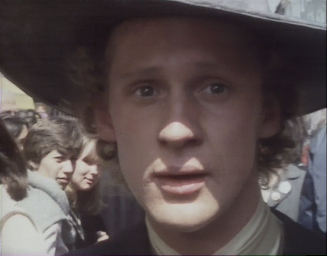
Will Parker (John Shackley) and his cousin Henry Parker (Jim Baker) are both hurtling towards that magnificent adolescent milestone of hitting 16 years old. However, whereas in the present day this entitles the individual to an enhanced sense of freedom, Will and Henry are facing a rather different proposition.


Around 100 years previous, a mysterious alien force, travelling in enormous, three legged metal machines, invaded Earth and comfortably took control of the entire population. Through a process of 'capping', whereby a metal cap is implanted to the skull, the Tripods have managed to wipe out concepts such as war and greed, but all at the expense of humanity's free will.

And it just happens that this capping process takes place on humans when they reach 16. Will and Henry aren't entirely keen on the whole capping process, but their doubts are magnified exponentially once they meet a seemingly crazy vagrant with tales about what the Tripods are really up to.

A vagrant, of course, is one whose capping went wrong, resulting in their brains being permanently scrambled and being pushed to the edges of society due to their manic uselessness. However, the vagrant that Will and Henry encounter has an unrivalled wealth of wisdom and knowledge about the society they live in.


Naturally, Ozymandias (Roderick Horn) is most definitely not a vagrant. In fact, he's part of a collective known as the Freemen who plan to bring down the Tripods and re-install man as the shaper of his own destiny.  Ozymandias advises Will and Henry to skip their capping and head across the Channel to join the Freemen in the White Mountains.

Along the way, Will and Henry will pick up their trusted ally Beanpole (Ceri Seel), a French youth with a curious and inventive mind, as they make the long and arduous trek to the White Mountains. Once there they will begin planning to not only infiltrate the Tripod's domed base, but also bring them crashing down on their three legs.

Bringing The Tripods to Life

Broadcast between 1984 - 1985 over the course of 25 episodes, The Tripods was a joint adaptation by the BBC and Australia's Network Seven of the trilogy of Tripods novels authored by John Christopher in the 1960s.

Producing the show - and catalyst for it's inception - was Richard Bates who brought in Alick Rowe to adapting the trilogy. The menacing score to accompany this adaptation, powered by an army of furious synthesisers, was Ken Freeman (no relation to the Freemen).

The show was handed the Saturday 6.30pm slot on BBC1 which had previously been the home to Doctor Who for many years. As a result, The Tripods was privy to a heavy round of promotion which involved numerous TV slots and the front cover of the Radio Times.


And key to the buzz surrounding The Tripods were the lavish special effects which would become the sole focus of all promotions. Utilising a Quantel Paintbox workstation, the team behind The Tripods could manipulate video images in a way which Doctor Who could only dream of.

However, despite The Tripods being built up as revolutionary take on TV sci-fi, it was to fall foul of Michael Grade's war on TV sci-fi. Therefore, despite The Tripods' narrative being comprised of a trilogy of books, only the first two were adapted for TV before the project was cancelled.


The viewing figures hit a peak of 9.5 million viewers, but the average audience was around 6 million. Not terrible for the time, but disappointing when compared to the viewing figures that The A-Team was achieving on ITV. Michael Grade explained the decision to drop The Tripods thusly:

"Response to the first series of The Tripods was very disappointing both in terms of popularity and appreciation. The second series has shown no improvement"

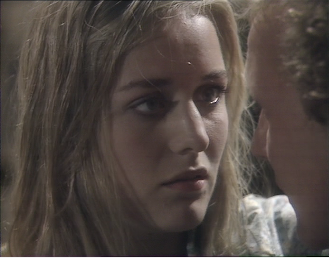
Perhaps the biggest and most heartfelt tragedy relating to The Tripods was the death of actress Charlotte Long who portrayed Will's love interest, Eloise de Ricordeau, in the first series. After Charlotte's death in a motor accident, she was replaced for a non speaking scene in the second series by Cindy Shelley

An Exploration of Free Will

I was still in nappies by the time the first series of The Tripods aired, so missed the whole affair the first time round. My introduction to sci-fi TV came around a year after the second series of The Tripods finished when I started watching this little known show called Doctor Who. I often wonder what happened to that.

Anyway, I soon become addicted to sci-fi and was particularly intrigued by these strange VHS tapes I started seeing in shops for some show called The Tripods. It looked intriguing, but my pocket money wasn't enough to purchase one of these mysterious videos which featured an array of beguiling images.

A few years later I started secondary school and, nestling in the school library, was a compilation of all three books from The Tripod's trilogy. And, best of all, it was a TV tie-in version of the story and featured a large screenshot on the front cover along with some suitably retro 80s fonts.


Unfortunately, I didn't get far reading it as I was beginning to forego books for the pleasures of late night TV that I was now aware of thanks to finally getting a TV in my bedroom. A clear case of TV trampling all over literature, but I just had to watch The Vicar of Dibley, okay?

I never forgot about The Tripod's, though, and it's dystopian vision haunted my thoughts regularly. Thankfully, 2009 finally saw the complete series released on DVD, so I could finally hold The Tripods up to the light and examine all its resplendent glory whilst cowering in the shadow of its chilling bleakness.


Now, the biggest accusation attributed towards The Tripods is that it's overlong and takes far, far too long to get from A to B. And, you know what? It's a damn good point. The first book in The Tripod's trilogy comes in at around 200 pages, but on TV this is stretched out to six and a half hours.

Whilst certain sections are quite, quite amazing - such as the abandoned Paris scenes which contain the same terrifying shivers as The Walking Dead - other passages feel like a slow trudge through treacle. Perhaps the most mind numbing are the Chateau sequences which drag on for an interminable amount of time, but add barely a footnote to The Tripods' narrative.


The episodes at the vineyard are also frustratingly dull, but they do feature some fascinating scenes where Madame Vichot (Anni Lee Taylor) reveals her capping was not 100% successful in eradicating her sense of wonder. More interesting revelations such as this sprinkled throughout the first series would have made for much more engaging viewing.

The first series also contains a number of episodes which see Will, Henry and Beanpole walking long distances with very little happening, but I've always found these episodes resonated strongly with me. They evoke that gang like mentality we all fall into during our youth and recall, for me anyway, many endless walks where crushing mundanity was the norm.

Much more exhilarating, however, is the second series which starts at a brisk pace with our heroes planning an audacious expedition into the heart of The Tripod's main city. Although there's still a sense of wandering boredom at times, the length of the second series is packed full of variety thanks to the shifting narrative and this goes some way towards atoning for the first series' sluggish pace.


Perhaps most captivating in the second series' narrative (and indeed the entire series) is the friendship which Will strikes up with his Master (named 468). Despite the nefarious intentions of 468 and his associates, he appears to be genuinely interested in Will. This interest however, is just as nefarious as his end goals, but Will must persevere with this facade to glean what precious information he can.


The second series also contains a particularly trippy scene where Will meets one of the most powerful beings in The Tripod's city, the Cognosc. A particularly high brow piece of sci fi, it's a mind bending piece of TV which sees Will's conscience being invaded and analysed by this high level consciousness. It's disturbing, but also helps to kick start Will's dramatic escape from the city.

The fear and bewilderment generated by The Tripods isn't purely limited to cerebral exercises either. There are also a number of visual scares for kids to peek through their fingers out.The forest scene featuring filthy hordes of cannibal vagrants is akin to something from a horror film and the late night Tripod hunts are dizzying displays of predator-prey relationships.

However, the accusations of prolonged thumb twiddling levelled against The Tripods are most certainly fair. It was moving in the right direction, though, and maybe the third series would have been a particularly pacy beast. Sadly we'll never know.

The special effects employed in The Tripods are, of course, one of the big talking points, so let's take a look at these. Well, yes, they're certainly leagues ahead of Doctor Who and Blakes 7, so it's encouraging that the BBC were ready to explore new techniques. However, it would have been even nicer had they been a bit more generous with the special effects.


They're certainly impressive, for the time, but the majority of the first series allocates less than a minute per episode to these eye-catching effects. The rest of the time, all we're treated to is the bottom third of a Tripod's leg which must have been nothing short of a nightmare to transport about and position.

Again, much like the plot, the second series seems to pick up in this respect and the special effects are much more prevalent. In particular, the scenes set within The Tripod's city are exciting little slices of visual delight and hint at a level of design Doctor Who could benefit from, but never did (Trial of a Timelord opening scene aside).


The non-computer generated effects, however, are your typical archaic BBC designs of the day which still appear to be stuck in a Jon Pertwee era episode of Doctor Who. I'm always particularly irked by the amateurish 'Monster Munch' design of the Masters which undo a lot of the goodwill built up by the computer graphics.


Nonetheless, The Tripods retains a striking aesthetic and is definitely an interesting peek into production techniques of the time. One completely bonkers area of the production, though, is the homoerotic take on club culture which is beamed through The Pink Parrot nightclub for the slaves in The Tripod's city. Frankly, it looks like the venue for a great, lost Frankie Goes to Hollywood video. And who doesn't want to appear in such a thing?

Special mention also needs to go to Ken Freeman's soundtrack which conjures up the required emotional smorgasbord of aural delights to match the action beat for beat. Anything less broody and electronic would have felt like an anticlimactic score, but here it's a wonderfully aggressive stab of electronic coldness which embody the sinister movements of The Tripods.


And what about the young actors journeying through this landscape of slow thrills and sumptuous visual delights? Well, as with most British TV of the 1980s, the acting is a suspect mixture of the decent, the wooden and the downright monotone.

Our three leads, thankfully, manage to be an engaging bunch. Although Jim Baker takes a little while to get going, he's settled into his groove as Henry Parker by the end of the first series and grows throughout the second series. Beanpole, meanwhile, has a geekish, intelligent charm which Ceri Seel conveys through a mixture of natural smarts and charismatic patter.

Most exciting, though, is John Shackley who displays an impressive range of emotions whilst playing Will. From rallying against The Tripods wicked ways, to infiltrating The Tripod's inner sanctum and his romantic liaisons with Eloise, Shackley demonstrates he's a capable young actor, but sadly acting wasn't for him and he departed the world of showbiz shortly afterwards.


As I've already mentioned, there's also a lot of sub par acting on offer and it's difficult, and rather unfair, to single any particular actors out. If we're going to highlight anyone else for their acting then it would be Roderick Horn as Ozymandias whose time on screen is only fleeting, but he always retains that aura of an old, trusted friend you're delighted to see.

It's a charm which is missing, perhaps, too often from The Tripods but reminds you that there's some magic contained deep within the show's DNA.

Triumvirate of Brilliance?

Whatever you say about The Tripods, you can't say it's boring. Well, you can, but that's all part of it's curious charm and underlines its cult appeal.

Being based upon a fantastic trilogy of books (and they really are rather splendid), the BBC found themselves in an enviable position with The Tripods on their hands. Unfortunately, the adaptation process, for rather inexplicable reasons, has gorged itself on an excess of banal, humdrum adventures.

Although this appeared to have been rectified by the second series, it's no surprise that the viewing figures were so disappointing. A more streamlined episode run, maybe 6 - 8 episodes, could have created a tighter narrative to keep viewers on course, but this was not to be the case.

Nonetheless, The Tripods contains plenty to explore and there's the unfettered imaginations of how the third series would have unfolded to keep you busy for years to come.

ARTICLES

Jim Baker interview from Fantasy Image issue 3, 1985


Monday, 3 December 2012

Moschops


255 million years ago, there were a family of dinosaurs known as Moschops (meaning calf face) which stalked the plains of South Africa in search of vegetation. They did not, I repeat did not, wear baseball caps. Fast forward to 1983 and FilmFair decide to recreate the every day life of one of these calf faced herbivores. Complete with a baseball cap.

Genre: Childrens
Channel: ITV
Transmission: 05/07/1983 -
27/09/1983

The series focussed upon the gentle exploits of a young dinosaur called Moschops (baseball cap advocate) and his friends in a prehistoric valley. Moschops passes by the days by playing football - rather painfully with rocks - with his friend Ally (an Allosaurus) and looking after Flower - the first ever flower! On hand to provide support is the slightly manic Mr Icthyosaurus who likes to try his hand at spell casting and the chronic amnesiac Grandpa Diploducus. Ally's Uncle Rex also makes appearences with the avowed intent of instructing Ally in the ways of fierceness - something Ally is keen to avoid. The final character is Mrs Kerry - a rather busybody Triceratops who has an unhealthy obsession with tidiness.


The show was produced by the legendary FilmFair who already had The Wombles, Paddington Bear and The Herbs under their belt. Moschops utilised the same stop motion animation techniques to bring its characters to life. The episodes were narrated by the characterful intonations of Bernard Cribbins - who had taken on the same duties with The Wombles. Thirteen eleven minute episodes were made and first shown on ITV in 1983 in the lunchtime slot. No further episodes were made, but repeats continued to air for several years afterwards on ITV and Channel 4.


There have been a number of commercial releases of Moschops over the years. There was at least one VHS in the UK which was released by Castle Vision. Curiously, there was also a VHS release in the USA entitled Adventures in Dinosaurland - whether the show was ever broadcast there is another question. The 00s have seen a couple of DVD releases, but infuriatingly, these only comprise the first ten episodes between them. The three remaining episodes are, however, currently available on Netflix to view.


Curious British Telly was a big fan of Moschops back in the days of yore, so enjoyed revisting this beastie. FilmFair had a great ability to breathe life into their models with stop motion animation and Moschops benefits. This type of animation seems slightly quaint when compared to CGI, but it brings a level of slightly choppy charm that CGI can never reproduce. This coupled with the detailed design of the models means it's an attractive looking show. Helping the show get off on a good foot is the wonderfully inquisitive rock 'n' roll theme tune composed by Daryl Runswick. Moving onto the stories themselves, CBT particularly liked the way the writers (Ruth Boswell and Gregory Steward) tapped into the preschool audiences fascination with a rapidly changing world by installing Flower as a nice touchpost. One criticism we have is that the stories are a little too gently paced and slight, but again, this was aimed at preschoolers, so don't expect any Dostoyevsky epics. For the sake of nostalgia, CBT recommends revisiting the show if you remember it from your youth, but otherwise it's best to check out the other FilmFair gems first.

INTERVIEW

Curious British Telly is such a fan of the theme tune to Moschops that we recently caught up with Daryl Runswick to discuss his memories of working on it:

I had a lot of fun doing the music for Moschops. Ruth Boswell, the producer, had no money to spend really and asked me to be as frugal as possible. I knew I could get free studio time at the Essex Music studios in Poland Street, London, if I gave the publishing rights of the music to Essex Music. That saved a bit of money. We couldn’t afford session musicians so I brought in friends who were either not professionals or not Brits: the talented young bassoonist Sarah Watts, then still a teenager, my girlfriend Judith Ackrill, a good amateur musician who played tinkles on the percussion, and the wonderful Australian clarinettist Peter Jenkin who was visiting the UK at the time (and teaching me the clarinet). I played bass guitar, electric piano, descant recorder, additional percussion and an instrument of my own invention, the piccolo bass guitar (a bass guitar tuned with fine gauge strings an octave higher than normal). This line-up gave me great variety: the bassoon could play bass-lines but also melodies and rhythm fills. The clarinet could join in with the fills and do tunes too. The percussion and the recorder supplied the high sounds. I recorded the music for the entire series in one three-hour session by the simple trick of composing music that could be used over and over again in different episodes.

I tried to put the style of the music – kind of stone-age rock’n’roll – in the great tradition of children’s TV from The Magic Roundabout to Postman Pat. We had a ball with it.


Daryl is still busy composing and playing music. More details on his work can be found here: http://www.darylrunswick.net/

Saturday, 24 November 2012

The Flipside of Dominick Hide


An oft bandied around paradox about time travel is the 'Grandfather paradox'. This questions the effects of a time traveller going back in time and killing their Grandfather. Headaches then begin to form whilst trying to figure out how this could happen if the protagonist was, in theory, never born due to their Grandfather's untimely demise.  

The Flipside of Dominick Hide eschews this and, instead, looks at the great-great-great-Grandmother paradox. This curious postulation features a time traveller going back in time to kick-start his own lineage with their great-great-great-Grandmother. Child's play for any theoretical physicist.

  
Genre: Sci-fi
Channel: BBC1
Transmission: 09/12/1980

The Flipside of Dominik Hide was a 90 minute sci fi drama broadcast on BBC1 on 9th December 1980 at 9.35pm. Part of the Play For Today series, the show was cooked up by Alan Gibson and Jeremy Paul - the blueprints of the show being inspired by the Alan Gibson's fascination with flying saucers in the 1950s.

A fresh faced Peter Firth took on the mantle of Dominick with the delectably beautiful Caroline Langrishe playing Jane. The great Patrick Magee featured in a supporting role as Caleb. Filming for the play started on 10th May 1980 and wrapped on 4th June 1980.

In 2130, time travel is possible and any period before the Time Barrier was broken is known as the 'flipside'. This has led to the employment of time travellers whose mission is to travel back to the flipside and observe the mechanics of past societies.

Dominick Hide has been tasked with observing transport systems in London, 1980. Tracing his family history has led to Dominick discovering that he has a distant ancestor, also called Dominick, living in this same era and location.

Against strict instructions, Dominick begins to land and search for his great-great-grandfather in London, 1980. Any slight change Dominick makes to the past could buckle the future, but his yearning compels him to continue.

Compared to the ordered and steady society of 2130, the London of 1980 is noisy and chaotic. Finding himself in Portobello Market on a particularly busy day, Dominick befriends a small group of pals who vow to help find his distant relative 'Dominick' whilst he takes on the name 'Gilbey' - influenced by a quick glance at a bottle of gin.


Whilst the search for 'Dominick' continues, Jane and Dominick become increasingly attracted to each other. A romance fuelled by the difference between their backgrounds and outlooks. Jane eventually falls pregnant with Dominick's child and at this time, Dominick's superior - Caleb Line - reveals that this is the ancestor Dominick has been searching for.

Due to a one in a million genetic time mutation, Dominick is his own great-great-great Grandfather - a fact that Caleb has long known and why he has allowed Dominick to land on the flipside.

Dominick returns to London, 1980 one more time to set Jane and his son up for life with details on how to win the next week's football pools. Returning to the future, Dominick proceeds to have a child with his 2130 'wife', Ava.


The Flipside of Dominick Hide attained viewing figures of 5.3 million and a respectable reaction index of 75 - compared to an average Play For Today score of 59. The Radio Times letter editor claimed that "No other single new BBC tv play in 1980 attracted so much correspondence " - highlighting the public's affection for the show.

The success of the show led to a sequel in 1982 entitled Another Flip for Dominick. A DVD containing both plays was released in 2005 accompanied by a very detailed viewing notes booklet.


Curious British Telly first discovered Dominick a few months back and was thoroughly charmed by the production. The originality of the core concept is clever and well written - the divides between the two time periods are highlighted subtly, but leave a powerful question about the values of freedom over security.

Peter Firth, Caroline Langrishe, Sylvia Coleridge and Patrick Magee all put in terrific performances and capture the essence of their characters perfectly. Some of the acting does fall below par - Pippa Guard came across a little wooden and Timothy Davies was a bit too hammy, but this could also be down to poor characterisation on the writers' part. On the whole, though, there are more hits than misses which is impressive for the era.

One other area of the play which impressed was the music. The theme tune being a soulful number entitled You'd Better Believe It Babe by the band Meal Ticket which is echoed throughout. Also present, in the 2130 scenes, are wonderful medieval muzak takes on the Beatles songs: Yesterday and Lucy in the Sky with Diamonds.

All in all, this is a fantastic play which comes across with charm and innocence whilst balancing the genres of comedy, sci fi and drama. We thoroughly advise picking up the DVD.

ARTICLES

Radio Times 06 - 12 December 1980

At 26 Peter Firth has come a long way from the time he was ‘the boy in Equus’. After some notable achievements in films and television, and a good deal of foreign travel, he returns to television in Tuesday’s play as a very different sort of traveller – one who specialises in time-warp. He tells Benedict Nightingale why this part particularly appeals to him.
What Peter Firth ruefully calls his ‘damaged-cherub face’ was looking strangely phosphorescent when we met at his imposing pad in London W9. Perhaps it was a natural charisma, perhaps a blend of exhilaration and exhaustion, the result of the arrival of a son and heir within the past week. The birth had occurred at home, in defiance of medical scruple, and had brought with it a still unresolved problem. What was the ‘small person’, as he’s still known, to be called?
‘I keep coming up with names I think are all right, then I tell my wife, and they just seem to fall to pieces,’ said Peter. ‘I hope one will suggest itself when his character begins to form. We’ve got to register him some times.’
Up the stairs, puffing and contentedly grunting in his mother’s arms, went Timothy, Tristram or Tyrone; and Peter ambled through the house, into the big communal garden through which Nicholas, Nigel or Norbert will one day no doubt make his way to school. That is not a prospect that altogether pleases his father.
He is a warm, enthusiastic, outgoing young man; but he cannot speak about his education without resentment. Understandably so. He spent his schooldays in the D stream of a large comprehensive, never was encouraged to read literature or even taught to punctuate properly, and left with no qualifications whatever.
‘I felt cheated, frustrated. They were always telling me I was stupid, so I believed I was stupid and became stupid, and even now I feel stupid inside. I keep waiting for someone to tumble me as a fake and fraud – tell me I can’t really act. I was stamped as a second-class citizen, educated to be factory fodder. It’s hard to get over that.’
That was in Bradford, where Peter’s parent ran a pub in a rough, rowdy neighbourhood. His main occupations seem to have been hanging around on street corners and, just occasionally, getting into trouble with the police and putting in an appearance at juvenile court. But a girl he fancied went to drama classes and one Saturday he followed her there, arriving late and having to hammer on the door. If no one had answered he probably would have mooched off, never to return. As it was, the door opened, he was allowed in and someone even offered him a ‘scholarship’, meaning the two pounds ten shillings course fee he didn’t have.
‘Luck, chance, fortune, the line is this thin,’ says Peter, indicating with thumb and forefinger the tiny gap between success and disaster in his life. The point was re-emphasised when Yorkshire TV came to the drama class recruiting schoolboy walk ons: it was ‘you, you and you’, and he was one of the three.
From that came a part in a serial called The Flaxton Boys, and from that a leading part in another – Here Comes the Double-Deckers. At age 15 Peter was in London, beginning to lose his thick Yorkshire accent, and being paid for what he found he liked best: acting.
He never went formally to drama school, and doesn’t regret the omission, because he feels there’s no substitute for ‘the real thing’.
The real thing was St Francis’s youngest disciple in the movie Brother Sun, Sister Moon. It was also the boy with an overwhelming and finally destructive passion for horses in Peter Shaffer’s play, Equus.
‘I had ten auditions over two months for that part,’ he recalls, ‘the last time before the whole National Theatre board, Laurence Olivier and all. I had to get on the stage of the Old Vic, get astride a table, and mime an orgasm; and I had this awful moment, thinking to myself, this is insane, what am I doing? Then I went into the pub next door, my nerves absolutely shattered, and someone came in and told me: you’ve done it.’
He recreated the part in New York, and then in a film version, and found himself internationally acclaimed at the age of 20. It wasn’t an experience he altogether liked. For one thing, he found it difficult to appear on chat shows, smile on demand at press photographers, go lobbying for an Oscar in Hollywood, and do all the other things expected of showbiz celebrities in America. For another, ten months on Broadway proved too long.
‘If you’re going to take your clothes off you’ve got to believe in the part and the play to keep sane. And after a while I started to have doubts, get analytical, feel I couldn’t do it. It was worst on the matinees, when the blue-rinsed brigade was there for a day out. I felt like a circus sideshow: come and see the naked boy. It became a nightmare.’
If Peter had pursued success more relentlessly, he might not now be mainly remembered as ‘the boy in Equus’ and, on occasions be obliged to audition for roles which would once have been thrust upon him. But he preferred to go his own way, rejecting tempting offers, indulging his enthusiasm for travel (‘one way of making up for the education I never had’), and enjoying what he wryly calls the decadent, leisured life in New York City.
There were notable achievements over the years – among them Dorian Gray in a television adaptation of the Oscar Wilde novel, the title part in Tony Richardson’s movie, Joseph Andrews – but there’s no doubt his career was becalmed when Roman Polanski lured him back to Europe from America to play Angel Clare in Hardy’s Tess of the d’Urbervilles.
This movie, already a considerable success on the continent, arrives in Britain next January. Meanwhile, the important even in Peter’s professional life is his return to British Television in The Flipside of Dom Hide, in which he plays a prim young pilot who time warps his flying saucer from the future to the London on 1980.
‘The nice thing about acting is that you can live out your schoolboy fantasies, and one of mine is to go back in time. So for this part I tried to imagine what it was like being in London in 1830, with all the gin palaces, debauchery, filth in the streets. Someone who came back to our era would probably feel the same – that we were decadent by his standards.’
The naïve and confused attempts of its time travelling Candide to come to terms with our world give a strong comic slant to the play; and that, too, appealed to Peter when he first read the script.
‘Serious drama takes its toll,’ he says, remembering those fearful matinees in New York. ‘It is so gruelling, so wearying. I’d like to do more comedy. You get an instant gratification, a wonderful feeling of rapport, an immediate reward for your efforts.’
Peter would like to return to the stage, provided the play doesn’t run too long; but it’s clear his heart belongs to the camera.
‘It’s very real to me, not an inanimate object at all. You can feel when it’s happy and when it’s not. You can see it glow, and get bored. You can move it, and make it laugh. Yes, I love it.’

Sunday, 18 November 2012

Prospects


"That's how it's got to be if you want prospects. Irons in the fire, bread on the water, birds in the bush. Otherwise life is just waiting for the next giro."

And so goes Jimmy Pince's philosophy on escaping the dole queue in the first episode of Channel 4's comedy drama Prospects from 1986. It's a fair summary of what will follow over the next 12 episodes starring Gary Olsen as Jimmy 'Pincey' Pince and Brian Bovell as Billy Pearson. Yes, rest assured that there will be ducking and diving from a couple of Cockney chancers trying to hit the big time. Sound familiar? God bless Hooky Street? Nice little earner? By the mid 1980s, the British viewing public were crying out for socioeconomic studies of the Thames bathing beast that is the Cockney. Only Fools and Horses and Minder were fighting to be crowned king of the wheeler dealers and the recurrent angst of Eastenders was being christened within the sound of Bow Bells. So, why shouldn't Channel 4 have a stab too?


Genre: Comedy Drama
Channel: Channel 4

Transmission: 
19/02/1986 - 14/05/1986


Prospects was produced by Euston Films on behalf of Thames Television - the same setup that was behind Minder. This, of course, was back in the days when a large chunk of Channel 4's financial backing came from ITV and its various regional guises. Advertisement space and airtime was up for grabs and, thus, Prospects began airing on Channel 4's Wednesday 9pm slot. Alan Janes - whose previous work included Minder, Grange Hill and Z Cars - wrote all 12 episodes and the series was produced by Greg Smith - producer of the bawdy Confessions of a... series and co-producer of long running West End musical Buddy. The theme tune was composed and sung by Ray Dorset of perennial summer soundtrackers, Mungo Jerry. Tying in with the series, there was the almost obligatory release of books based on the show by Futura Publications.


Episodes usually centered around Pincey and Billy establishing a business in the designated 'enterprise zone' of the Isle of Dogs. Pincey takes the lead role in devising the week's hairbrained scheme - with dubious ethical overtones - and Billy, at first, acts pessimistic, but the promise of pound notes soon twists his arm. Business starts swiftly, but the duo's incompetency would usually lead to insolvency - much like Del Boy, though, they would occasionally come up smelling of roses. Filming took place during a time of great change for London, the Docklands were being redeveloped and this creates an interesting visual mix of building sites and decaying architecture in the background.

Prospects fared well on Channel 4 and was rewarded with a repeat slot on ITV. Things looked promising for a second series - rumoured to feature Pincey and Billy running a mini cab firm - but, sadly, this never transpired. Copyright issues have been put forward as a reason for the series coming to an end, but these haven't been substantiated. Currently, the only way to view the series is via a few episodes on YouTube or to pick up an illicit DVD which uses the UKTV repeats of the series. This DVD can be found online at various sites or occasionally on Ebay. March 2013 finally saw the show officially released on DVD.


Curious British Telly views Prospects as a missed opportunity. One aspect that frustrated is the bloating of episodes with filler material to make up the running time. Take 'Uncle Harry's System', the main plot itself isn't particularly deep, so to make up the duration, a subplot featuring Billy going to court for GBH is stapled on. Unfortunately, this is an uneventful affair and resolved half way through the episode without any bearing on the main plot. It's disappointing as it's a missed opportunity for more rounded story telling. The character of Billy is also a bugbear as he seems to have suffered from poor character development. Most of the plots are driven by Pincey with Billy doing little more than following round as his lackey, voicing only the occasional disapproval.

Nonetheless, there are also positives to the show. Pincey's character is a highlight and Gary Olsen brings plenty of roguish charm to the role. The camerawork is surprisingly good for the time - instead of just pointing the camera and shooting, there has been a real effort to give the show some visual appeal. It's not TV cinematography on the scale of Sherlock, but it certainly beats Crossroads. Praise can also be reserved for Prospects taking a swipe at Margaret Thatcher's policies of the time - sure, Pincey and Billy embrace the concept of free enterprise, but the hardship of unemployment leads to operating below the law. Despite not being a rollicking laugh riot, there's enough humour to give the show a breezy, laddish charm and, taking the better plots into account, one well worth a visit.

CUTTINGS

TV Times (1 - 7 March 1986)


Tuesday, 13 November 2012

The Pig Attraction


The theme tune comes to an end, a star covered door slides open and out bounds a talking pig dressed in a jacket so garish that even Jonathan Ross would think twice before donning it. The pig then proceeds to take to the pretty well designed chat show set where he begins to interview a giant bird wearing some natty 90s threads. No, this blogger hasn't been snorting mescaline through old issues of the TV Times, this was The Pig Attraction!


Genre: Childrens
Channel: ITV
Transmission: 06/05/1993 - 08/07/1993

The Pig Attraction aired in 1993 on ITV during the CITV slot and is a difficult beast to define. Its main subject matter wasn't the lesser explored world of romance between man and pig, but, thankfully, puppets. The show centered upon the art of puppetry through a number of different sections. Billie the Pig fronted the show where he mostly interviewed TV puppets from the past. Billie was also involved in the backstage sections which recalled the chaotic nature of The Muppet Show. Billie was backed up by the puppeteer Simon Buckley - with a ridiculously long list of puppet credits - who would take to the road to visit puppet theaters and discuss their craft.

Featured puppets included: Nobby the Sheep, Earl E Bird, Nobby the Sheep, Roland Rat, the Pipkins gang (Hartley Hare eventually joined the show causing various trouble backstage). Peter Baldwin aka Derek Wilton from Coronation Street was one puppeteer featured talking about his love of Victorian puppet shows. Yes, this really did happen. Pinky and Perky also made their first regular appearance on television in decades by appearing each week where they would belt out a pop song with their helium vocals. A CD, vinyl, cassette tape and VHS of their performances wa released. For one reason or another... I didn't purchase these...


There was only one series produced by HTV consisting of ten episodes and no repeats ever aired. It was the epitome of a curious show and a brave move by ITV to aim something so niche at children. Another series would have been welcomed by myself, but I can't recall a huge buzz in the playground about the show. Other contemporary documentary programmes such as How 2 and It'll Never Work seemed to capture the interest of my sugar addled peers more.

An interesting note is that, perhaps more than anything, this show ignited my interest in TVs murky and alluring past. For the first time in my short life, I began to think back to TV shows that I could only remember fleeting fragments of. The Internet was still several years away from becoming a mainstream utility, so The Pig Attraction was a rare resource on the history of Children's TV.

Until a few years ago, there was no footage of the show online. Luckily, I had recorded an episode back in the day and uploaded it to YouTube in 2009. This allows you to relive the show in it's whole glory and see that the show is actually very well put together. A show featuring 'arranged' chaos suffers the potential to fall on it's face, but the more sober documentary sections manage to balance this. The episode can be found here - http://www.youtube.com/watch?v=NJTQRY_t42E

INTERVIEW

I recently contacted Simon Buckley to see if he would be willing to answer a few questions about the show and he kindly accepted - Curious British Telly's first interview!
CBT: Hello, Simon! Many thanks for taking part in this interview for Curious British Telly. So, how the devil are you?
Simon: Hi, I’m well thanks - just been discussing the logistics for another batch of Churchill Insurance commercials which is one of my current on-going projects.
A quick glance at your website reveals that you've had a long career in the puppetry game and worked with some iconic British puppets. How exactly did your career start? Was it performing sock puppetry for family members or something more intriguing?
Haha! Not socks but gloves! Well, glove puppets. It all began with the gift of Sooty and Sweep glove puppets from my grandparents when I was about four, but things really got going when (after a nicely worded letter to Santa!) I got a string puppet wizard for Christmas at the age of eight. It was a ‘Pelham Puppet’ part of a large range of quite nicely made puppets that were sold in ‘posh’ toy shops in the 60’s and 70’s and I quickly saved up my pocket money to buy dozens of different characters over the following years. My parents and their friends patiently watched my latest ‘performance’ as I demonstrated each new puppet in some, probably tedious, show! I was asked by a girl in my class to do a show at her birthday party and so aged 9, and charging £1 my professional career began! In the year I turned 16 I did just over a hundred shows at birthday parties and the like, and was charging a bit more than £1!
I've always found The Pig Attraction very interesting as it was so varied and difficult to pigeonhole into one genre. It was part documentary, part chat show and part show within a show which kept it fresh - essential for keeping the attention of children. Could you tell us a bit more about the show's origins and how you came to be involved?
For six years I performed a character on Saturday morning ITV called Nobby the Sheep. Nobby’s first show was called Ghost Train and it toured around the country with a different episode each week being produced by a different TV region (we had lots of ITV companies in those days) In Bristol and Cardiff the shows were produced by HTV and HTV West where Peter Murphy was the producer. He had a passion for puppets and innovative TV and had produced the hugely successful Rolf’s Cartoon Club, in which the legendary Rolf-Tie-my-kangaroo-down-sport-Harris demonstrated the art of animation and cartooning in between clips of classic cartoons. Peter wanted to do something similar, but with puppets. About the same time, having met me through Nobby the Sheep, Peter engaged me to work a puppet pig for an environmental series with Bill Oddie called Ask Oddie, and so the idea evolved to make the format of the puppet series a chat show with Billie the Pig as it’s host and with my knowledge and experience at it’s heart.
On camera, you were visible as a presenter for The Pig Attraction and also hidden as one of the puppeteers. I believe that, off camera, you had a role as consultant for the show. What exactly did this entail?
The show’s format was developed entirely by Peter Murphy and Peter Curtis at HTV. But I believe it’s fair to say that about 90% of the content came from me. I was really keen to use this as a showcase for the vast range of puppetry styles and techniques many of which were not used on television and inspire children with this rich and wonderful artform. My exact title changed so many times, but basically I basically provided everything from many of the contacts with puppeteers and puppet companies, to an understanding of the subject in hand as well as the set dressing for the puppet workshop and devised the simple ‘make and do’ elements of the show. I had more pies to have fingers in than I actually had fingers!
Billie the Pig was the host of the show firing out wisecracks here and there as he tried to hold the show together. He's always reminded me of a porcine Bob Mills, but I wondered if you could explain the influences behind him.
Billie was more inspired by Ben Elton (as he was in the late 80’s) I think, than anyone else. Part Kermit - always stressing backstage about the acts that hadn’t turned up, and maybe part cheesy gameshow host, with his penchant for mock Versace glittery jackets!
How smoothly did the production of the show go? I know from experience of filming with humans that production can be a strenuos task. How does this differ when puppets are thrown into the mix? 
Oh it all went a breeze darling and there were absolutely no hiccups or tantrums! Haha! There were a few, but not too many! It was great that most of the puppeteers were friends of mine so they were really keen to support me, but a few of them I didn’t know and their sole interest was to make their puppet appear to be the ‘best’ on the show. Particularly those who were not used to working as a team (as those of us who worked on say Spitting Image did) came with rather larger egos! The logistics for the set were tricky too, in the end it looked great but the variety of sizes of puppet and different operating methods did set a few unique challenges that you don’t face if you’re filming Eastenders! I also wore too many ‘hats’ in the show and so the filming days were some of the hardest I’ve experienced in my 27 years of TV.
Most episodes featured yourself travelling to meet various puppeteers and theatre groups to chat about the mechanics of puppetry. You always seemed genuinely enthused about discussing this art, so is it fair to say it was a dream job?
I was passionate about this show, and the show we started to make was a dream come true for me. It took a few turns that I didn’t really like (too many C list puppets plugging their own shows, rather than contributing anything really interesting or funny) and some of the original concept got lost, but even today people thank me for pieces that I filmed on the Puppet Barge or The Harlequin Puppet Theatre in North Wales (Britain’s First Permanent Puppet Theatre built in 1958) as they provide a really valuable and quite rare record of that kind of puppetry. I was also thrilled to get such a great series of interviews with Brian Henson, son of Jim, and I am sure that it was my genuine inside knowledge that enabled him to be very open with me and share so much with the audience, beyond what we had been told he would be prepared to do. Too often when someone interviews a puppeteer they ask the same overly simplistic questions like “do you get the strings tangled?”. Yaaaaaaawn!!! Thankfully the fact that I knew my subject helped to make up for the fact that I really wasn’t great on camera... I think I was more wooden than any of the puppets! And boy did I wear some shocking clothes.
There was only the one series of The Pig Attraction produced, but were plans for a second series ever mooted? Did the team feel as though they had accomplished everything they had set out to do or was there further ground to cover?
I can’t pretend the show was a massive hit with the viewers, who didn’t quite know what it was (going back to your earlier question really!). An Exec at the BBC said to me afterwards “I wish we’d made it, we would have refined the idea and got you a second series”. I think that’s true, but with ITV being more ratings conscious (because of the advertising) it was a case of if it’s not a clear hit, let’s ditch it and try something else. I did think there was more of the world of puppets to show, but we had almost exhausted the inter- puppet chat show format with Billie I think.
Finally, what are your fondest memories of working on the show?
Lots. I loved working with the beautiful Jan and Vlasta Dalibor, the elderly and original creators of Pinky and Perky - characters I had loved as a child. They were the most charming and delightful couple to work with. Filming at the Harlequin was a particular joy, as Eric Bramall the theatre’s founder had encouraged me so much as a teenage puppeteer, and it was great to be able to have him as a guest on my show, hopefully proving that his encouragement had paid off. But what was most striking was the way that the crew fell in love with so many puppet characters, or appreciated the skill involved in making and performing puppets. It was, and remains, the ability of these funny little characters to make us believe they’re alive- if only for a moment- that never ceases to make me smile.
Simon, it's been an absolute pleasure chatting to you and finding out a bit more about The Pig Attraction!
Further information on Simon and his work can be found on his website at www.simonbuckley.co.uk 

Friday, 9 November 2012

The Nightmare Man


The latest show that Curious British Telly will be cocking its eye towards is the BBC's 1981 production of The Nightmare Man. Based upon the 1978 novel Child of the Vodyanoi by David Wiltshire, the TV version was adapted by the mercurial Robert Holmes of Dr Who fame and directed by Douglas Camfield. The serial was set over four episodes and broadcast between 01/05/1981 - 22/05/1981 at 8.20pm on BBC1.

Genre: Sci Fi / Thriller
Channel: BBC1

Transmission: 01/05/1981 - 22/05/1981

The Nightmare Man takes place upon the remote Scottish island of Inverdee where the body count is rising as a rasping psychopath stalks the peaceful, grassy knolls. Lines of communication are jammed as an enveloping fog descends upon the isle and the likelihood of outside help begins to diminish. Heading the investigating force is Inspector Inskip who - through mouthfuls of whiskey and cigarettes - concedes that the murders are more brutal that anything he ever saw in Glasgow. Aiding the police force is Michael Gaffikin, an English dentist who is trying to win the heart of local chemist, Fiona Patterson. Ever present in the background, is the holidaying Colonel Howard who is overly keen to enquire and offer help.


Robert Holmes is revered amongst Doctor Who fans for his charmingly idiosyncratic scripts during the classic era of the program. One of his early creations - the Autons - were even chosen to kickstart the new era of Who in 2005, an impressive 35 years after their first appearance. If anyone is unfamiliar with Holmes' aptitude with a script then just check out Genesis of the Daleks - featuring the infamous "Do I have the right?" speech. Therefore, BBC producer Ron Craddock had little doubt that The Nightmare Man would be in safe hands when approaching Holmes. There are little similarities between this show and Holmes' Doctor Who - the lighthearted charm of Doctor Who is replaced by a much more mature and serious tone. The only similarities are the perilous cliffhangers and the occasional workings of a double act between Inspector Inskip and Sergeant Carch.


In the best tradition of suspense, the killer in The Nightmare Man remains mostly hidden until the last episode. Up until then, the viewer is only thrown a handful of brief and inconspicuous glimpses of the killer - giving little clues to who or what is terrorising the islanders. It's a decent enough trick, but the eventual reveal in episode 4 is a little disappointing and one suspects the show - as with most sci fi of the time - was not given the largest of budgets. The acting is passable and no worse than other similar shows of the era, but the only performance that I felt stood out was the calm, but determined Inspector Inskip portrayed by Maurice Roëves - later reunited with Robert Holmes in the Doctor Who serial Caves of Androzani. 


The first episode attracted an audience of 7.4 million viewers and then averaged 6 million views for the following episodes. In the days where there were just four channels on offer, these were not the types of ratings considered huge , but respectable nonetheless. The public reaction appeared to be positive with a number of comments making the national press and the show was later sold to several foreign climes. Despite this, the show would never be repeated again on British TV. The show became commercially available for the first time in 2005 with the DVD release. It comes with an accompanying booklet which details somewhat exhaustive production details for any sycophants.